
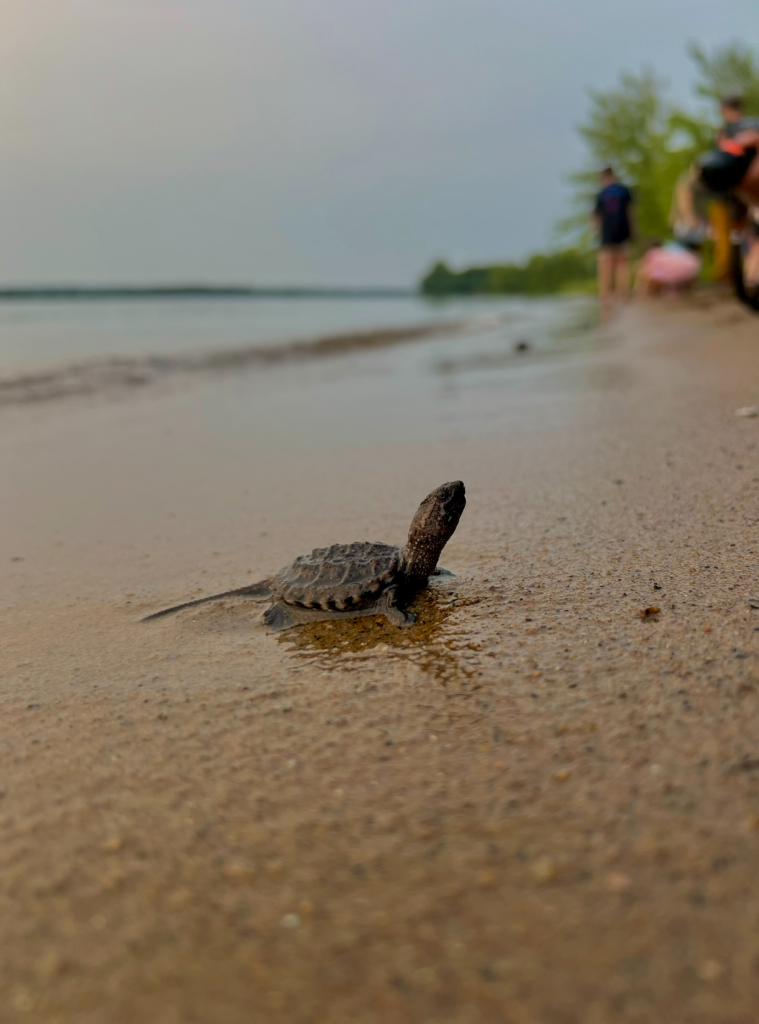
Turtles at Petrie Island
At Petrie Island, three fascinating species of turtles can be found: the Midland Painted Turtle, the Northern Map Turtle, and the Snapping Turtle. Each has unique characteristics and behaviors that make them a special part of the island’s rich biodiversity.
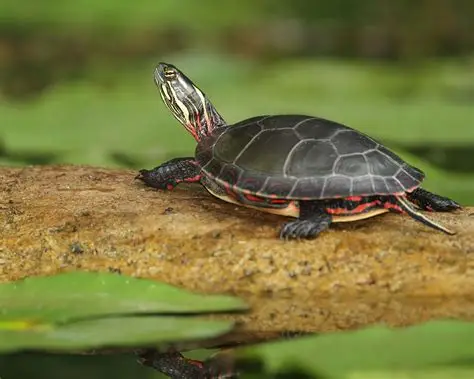
Midland Painted Turtle
The Midland Painted Turtle is the most vibrant of the trio, displaying bright yellow, orange, and red stripes along its head, neck, and limbs. Its plastron (the underside of the shell) is equally colorful, often tinted with reddish or orange hues, while the top of its shell is a glossy black. These turtles are a common sight from spring through late summer, often seen basking on logs along the popular Turtle Trail. Despite their abundance in appearance, they are listed as a species of special concern under the federal Species at Risk Act due to habitat loss and environmental pressures.
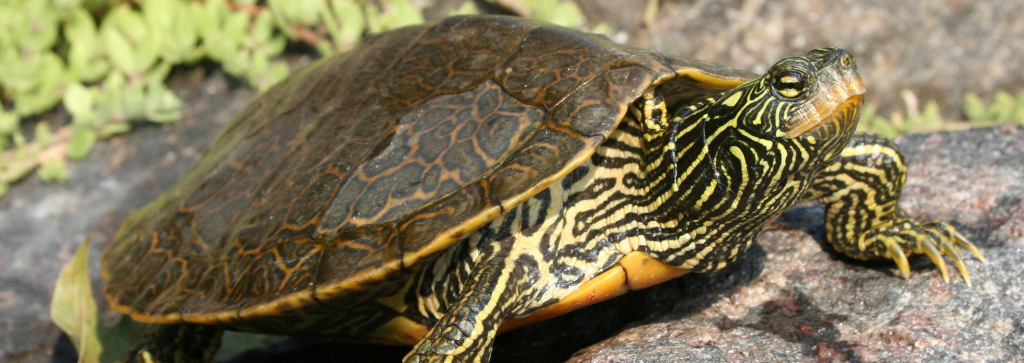
Northern Map Turtle
The Northern Map Turtle gets its name from the intricate yellow lines that run across its olive to brown-colored shell and body, resembling the contour lines of a topographic map. Their shells are typically rougher and more keeled compared to the painted turtle. Like the painted turtles, map turtles are frequently observed sunning themselves on logs throughout the warmer months. This species is listed as of special concern under both federal and provincial conservation lists, largely due to its sensitivity to water pollution and shoreline disturbance.
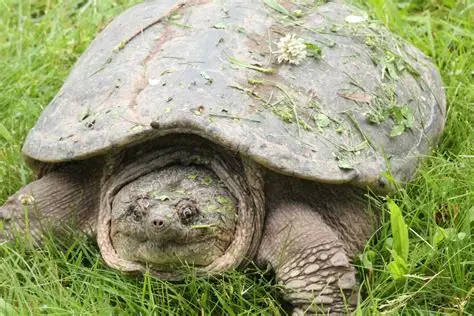
Snapping Turtle
The Snapping Turtle, the largest of the three, is known for its prehistoric appearance and powerful defensive bite. With a rugged shell, long tail resembling that of a dinosaur, and a beak-like jaw, it’s both an impressive and intimidating presence. Unlike the other turtles, snapping turtles are less likely to bask on logs. Instead, they prefer to stay partially submerged at the edges of wetlands, often nestled in the mud with just their head showing above the water’s surface. They are occasionally seen along the Turtle Trail but are more elusive in nature. The snapping turtle is also listed as a species of special concern federally and provincially due to threats like road mortality and habitat degradation.
Our Efforts
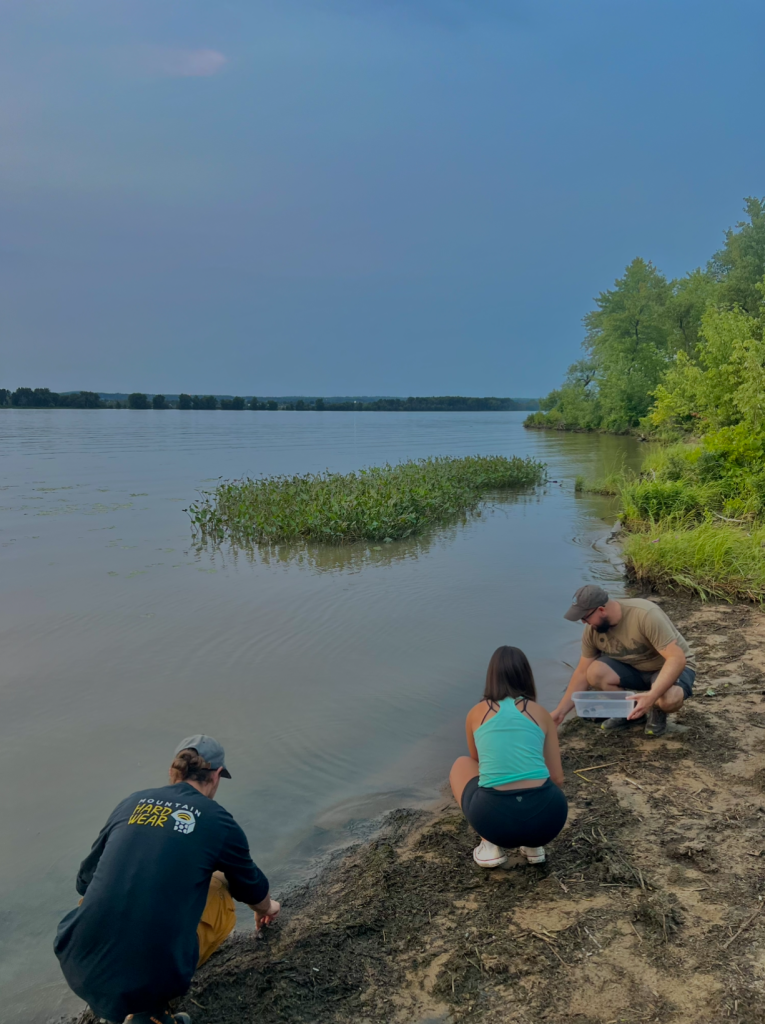
The Petrie Island Turtle Project was launched with the goal of protecting and supporting the local turtle population, particularly in response to high rates of road mortality, which pose a serious threat to these slow-moving reptiles. Led by the dedicated team at the Friends of Petrie Island, the project plays a crucial role in local conservation efforts by monitoring, protecting, and helping turtle nests throughout the breeding season.
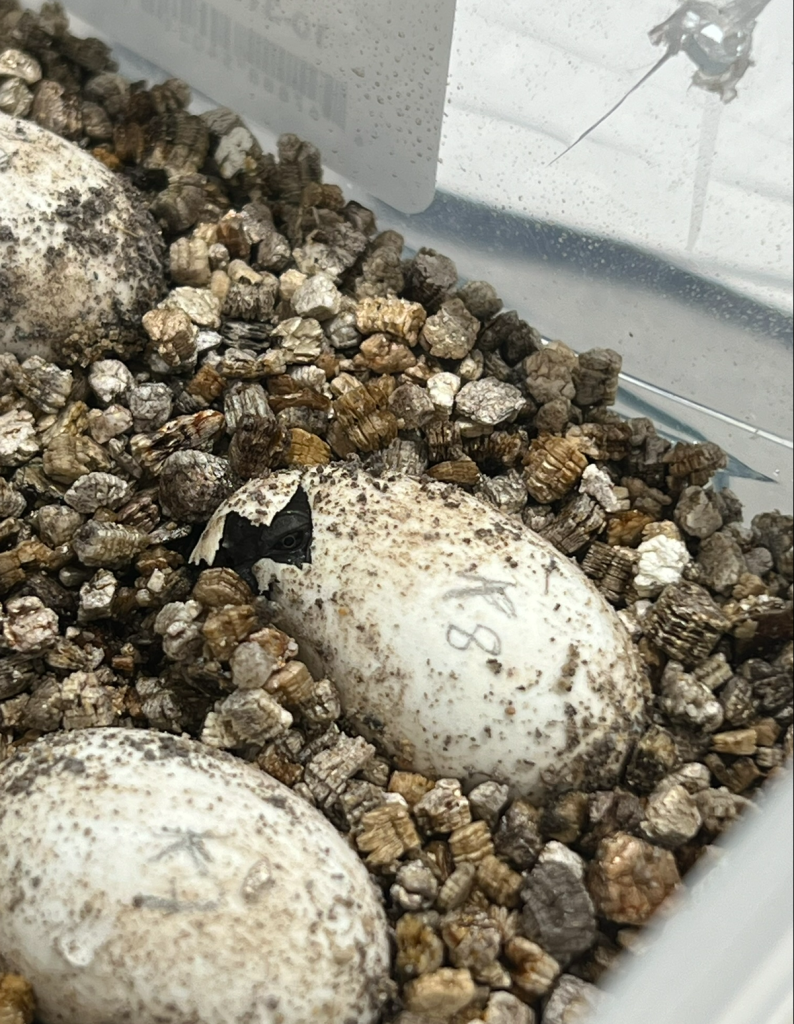
Each year, the program welcomes a limited number of passionate volunteers, who assist in patrolling the trails to locate nesting turtles. When a nest is discovered, trained staff carefully collect the eggs to protect them from predators and environmental threats. Nesting season typically runs through the entire month of June, and once the eggs are safely retrieved, they are placed in incubators where they are monitored throughout July.
By August, the eggs begin to hatch, and the project hosts one of its most beloved events — the public turtle hatchling releases. These family-friendly events offer a rare opportunity to witness the tiny turtles being released into their natural habitat for the first time. Over the years, these releases have grown in popularity and are now a must-see summer experience for nature lovers of all ages. Due to high demand, spots for the release events fill up quickly, so early registration is recommended.
Sponsor Turtle Eggs
Community Support and Partnerships
The success of the Petrie Island Turtle Project would not be possible without the support of our community partners and organizations. Their contributions provide the resources, expertise, and collaboration that make this conservation work possible.
The Community Initiatives Fund through the Ottawa Community Foundation provides critical financial support, covering essentials such as the salary for our wildlife technician and the materials needed for nest collection, incubation, and hatchling releases. We are grateful for their commitment to protecting local wildlife.
The Canadian Wildlife Federation (CWF) is another cornerstone of our program. They provide the necessary permits and share guidance and knowledge that form the foundation of our turtle conservation practices. Their involvement strengthens our project and ensures it aligns with broader conservation goals across Canada.
We are also especially thankful for our partnership with the Cumberland Public Library. The library has graciously allowed us to host our incubator in their Historical Society Room, a secure and climate-controlled space close to Petrie Island. Beyond this, they have integrated our project into their children’s programming, offering turtle-themed story times, presentations, and crafts. This partnership not only supports our conservation work but also expands our reach, giving young learners and their families a hands-on opportunity to engage with local ecology. Education is a central pillar of our project, and the library has become a vital partner in helping us share our message with the wider community.
Education
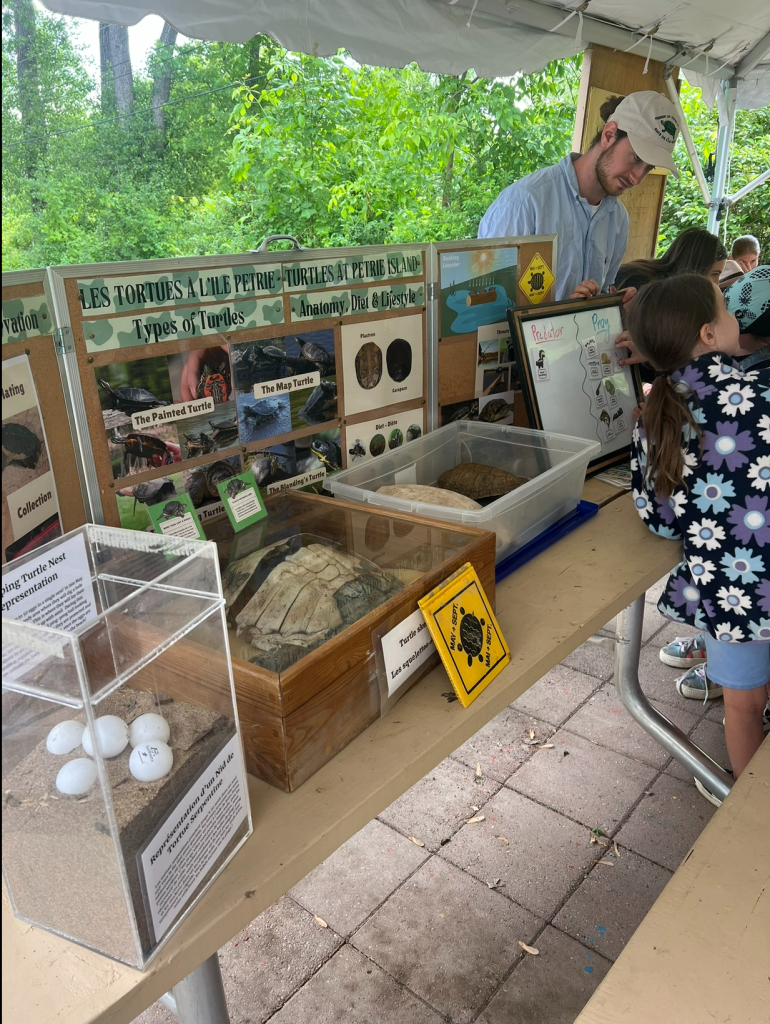
An essential part of the Petrie Island Turtle Project is educating the public about turtles and the rich variety of wildlife that call the island home. Through hands-on experiences and engaging programs, we aim to inspire a deeper appreciation for nature, especially among younger generations.
In addition to our popular hatchling releases, we offer a variety of educational events designed for kids and families. During May and June, we host special tours and interactive activities ideal for end-of-school outings, where students can learn about local species, habitats, and conservation in a fun, outdoor setting.
Throughout the summer months, we provide private tours and presentations that are perfect for birthday parties, family gatherings, or small groups interested in learning more about the turtles and the island’s ecosystems.
We also run our highly popular Naturalist Sessions in July and August, offered in both English and French. These sessions are tailored to two age groups: 3–8 and 9–13. Each session is packed with discovery-based learning, games, and nature exploration, lasting approximately 2 hours and priced at $5 per child. It’s a fantastic way for kids to get outdoors, learn from real naturalists, and connect with the environment in a hands-on way.
For the most up-to-date dates, times, and registration information, we encourage you to visit our website or follow the Friends of Petrie Island on social media. Spaces for these programs can fill up quickly, so early booking is recommended!